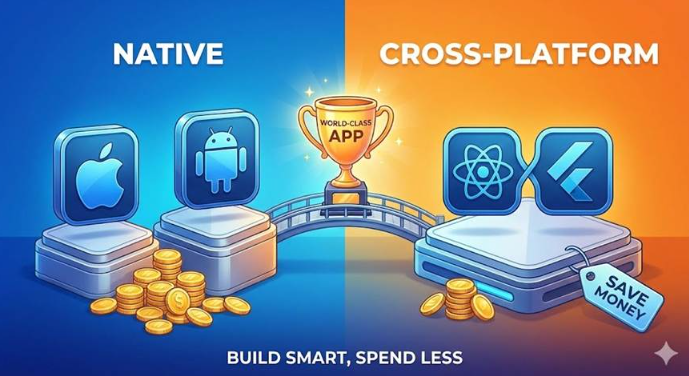
For any startup founder or business owner in 2026, the question is no longer “Do we need an app?” but rather “How do we build it?”
Historically, you had two expensive choices: build one app for Apple (iOS) and a completely separate one for Android. This meant two development teams, two budgets, and double the maintenance. Today, the landscape has shifted. Technologies like Flutter and React Native have narrowed the gap between “Native” and “Cross-Platform” performance, creating a new gold standard for speed and efficiency.
Here is how to decide which path is right for your digital product.
1. The Case for Cross-Platform (Speed & Efficiency)
If you are looking to launch an MVP (Minimum Viable Product) or need to hit the market fast, Cross-Platform development is the undisputed king. Frameworks like Flutter allow developers to write code once and deploy it on both iOS and Android simultaneously.
This “write once, run anywhere” approach can reduce development time by 30-50%. It ensures that your users get the same features and UI consistency regardless of their device. For 90% of business apps—ecommerce stores, booking platforms, and content apps—cross-platform solutions are now indistinguishable from native ones.
2. When to Go Native (Performance & Hardware)
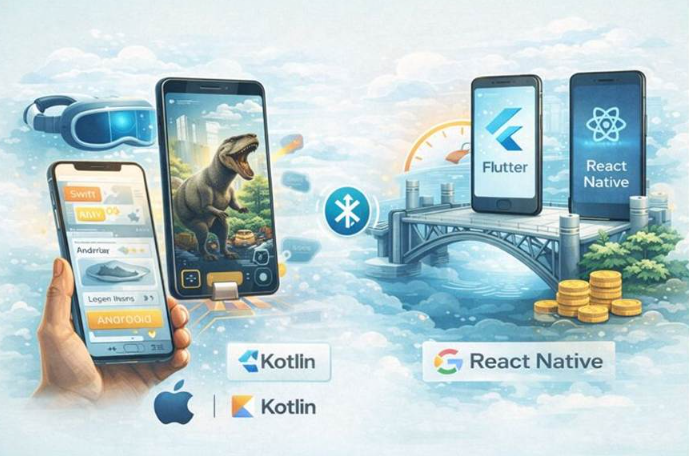
While cross-platform is powerful, “Native” development (Swift for iOS, Kotlin for Android) still holds the crown for high-performance requirements. If your app relies heavily on complex device hardware—like AR/VR capabilities, heavy graphical processing for gaming, or intricate Bluetooth integration—native is the safer bet.
Native apps have direct access to the device’s core components without any “bridge” slowing them down. However, this premium performance comes with a premium price tag and a longer timeline.
3. The Mobile-First Consumer
Regardless of the tech stack you choose, the market demand is undeniable. According to recent data from Statista on mobile usage, mobile devices now account for over half of all global web traffic. Users expect a seamless, crash-free experience.
A buggy app is worse than no app at all. It damages your brand reputation instantly. This is why the “Maintenance” phase (often overlooked) is just as critical as the build phase. You need a strategy for regular updates, security patches, and adapting to new OS versions.
Choosing the Right Partner
Deciding between Native and Cross-Platform isn’t just a technical decision; it’s a business strategy. It affects your budget, your timeline, and your ability to scale. You don’t just need a coder; you need a strategic partner who understands your business goals.
For deeper dives into app development strategies, tech stack comparisons, and emerging trends in the mobile space, I recommend exploring MeraSEO’s tech insights. Making an informed decision now can save you thousands of dollars in “technical debt” later.
Conclusion
In 2026, you don’t necessarily need the most expensive app; you need the smartest one. By understanding the strengths of cross-platform frameworks versus native power, you can build a mobile experience that delights your users and fits your budget.