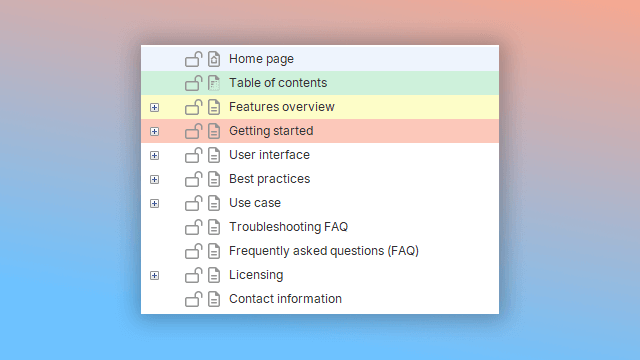
Contemporary software teams are under continual pressure to deliver features faster, with clarity to users and internal stakeholders. Documentation is a bottleneck, not that the teams are not taking it seriously, but they take a long time and it is also repetitive to write down manuals.
Ready-made samples address this issue by providing teams with a guided starting point. Rather than looking at empty pages, teams are able to concentrate on accuracy, usability and continuous improvement. This practice fits the documentation with agile development, automation, and long-term knowledge management.
Reduce Turnaround Time In The Documentation Process
Speed is one of the biggest advantages of ready-made manual samples. The preset structures, layouts, and sections do away with conjectures. Teams no longer argue about what should be in a manual or how it should flow. A well-designed user manual sample template already reflects industry best practices, ensuring consistency across products.
This enables programmers and authors to be able to document the features alongside the development, eliminating the delays in the release without losing professional standards.
Better Uniformity Between Products and Teams
As software teams increase in size, documentation tends to become uncontrolled. Various authors adopt varying styles that perplex users. Ready-made samples are used as a single reference model. They normalise terms, tone and structure of manuals.
When teams reuse a user manual sample template, every guide feels familiar to users, even across different modules or products. This uniformity develops confidence and minimises learning curves among the customers and internal departments.
Lessen Cognitive Load for Developers and Writers
Documentation is mentally taxing to write, particularly when it goes hand in hand with technical. Manual samples also decrease cognitive load through automating decisions of structure. Authors do not need to worry about formatting and layout because they can write about workflows, screenshots, and edge cases.
It is also advantageous to the developers who do not waste time responding to similar inquiries. Documented instructions minimise the number of support tickets and enable developers to work on product development.
Improved Knowledge Preservation and Onboarding
Software teams undergo a lot of fluctuation in terms of new personnel, new development, and new clients. Institutional knowledge is conserved in an easy-to-understand, reusable format using ready-made manuals. Onboarding is also made quicker by them. New recruits do not have to read the file to understand the documentation pattern, but can adhere to the patterns that have been read by others at the company.
Dr.Explain shows the connection between ready-made manual samples and automation in real projects. The tool automates the tedious steps like image annotation, templates, and multi-format publishing.
Quick onboarding, little setup, and direct engineer-developer technical support allow software teams to quickly and easily get new members. Dozens of hours are saved by teams, and international-standard documentation is preserved by cutting down on manual effort and streamlining working procedures.
Conclusion
Ready-made manual samples are not simply convenient anymore, but a strategic asset to software teams. They hasten the process of documentation, improve consistency, diminish workload, and enhance knowledge management.
Documentation ceases to be a burden with the integration of automation-oriented systems, such as Dr.Explain, into it, and it becomes an asset for growth.