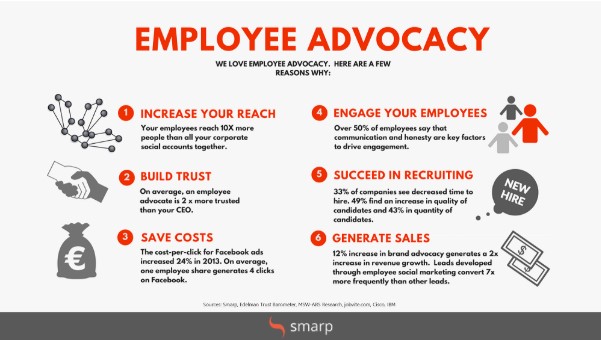
Companies are constantly seeking a method of enhancing contact and increasing scale. Employee advocacy is one of the strongest but underused strategies. By making your team members the brand ambassadors, you can establish authentic touchpoints with your audience, build trust, and drive sustainable expansion. Employee advocacy is not an option, but a necessity for those companies that provide or demand click-worthy growth services.
What Is Employee Advocacy?
Employee advocacy refers to the marketing of an organization through its employees, either through social media, word of mouth, or networking. Employee voices are more authentic and relatable, and they spread your message as opposed to using official brand channels only. This is important as individuals will tend to believe the suggestions by actual persons rather than corporate persons.
Why Employee Advocacy Boosts Engagement
The employees add a human touch to what the brands may not be able to recreate. By having your team post, discuss, and point out company accomplishments, you make your brand more open and reliable. Here’s why it works:
- Authenticity: Employee shareable content does not sound promotional.
- Long-lasting Reach: The personal connections of employees will present your brand to new people.
- Trust Factor: The recommendations by people are more important than advertisements.
- More Effective Relationships: Relationships are strengthened by the association of people with actual voices.
Using these advantages means that a business can tap into its internal passion to create external interaction that is measurable.
Steps to Implement Employee Advocacy
-
Educate and Empower Employees
Begin by demonstrating to your team the importance of advocacy. Train on social media best practices, brand messaging, and compliance practices. The more assured the employees are, the higher the chances they are to participate.
-
Provide Shareable Content
Not all people can afford to make posts on their own. Make sharing easy, whether it is company news, thought leadership articles, event highlights, etc. Promote personalization to make the posts non-scripted.
-
Recognize and Reward Efforts
Recognition is a long way. Reward those employees who are proactive in promoting the brand. Rewards can include recognition by others, minor rewards, or career development. Vitamin N is recognition and enthusiasm.
-
Track Analytics and Results
Employee advocacy, like any growth strategy, should be measurable. Track the involvement, reach, and conversion using analytics tools. Not only does this result in ROI, but it also contributes to the perfection of your advocacy program that will become even more successful.
The Role of Advocacy in Growth Services
It can also work wonders as a differentiator for most companies offering click-worthy growth services, such as marketing, consulting, or digital transformation. Employees who are genuinely excited about the brand will lend voice to it so much more authentically when they go out talking about it to potential clients. Such enthusiasm speaks of the culture that a company espouses as an internal environment that harmonizes with its values and offerings.
Customers tend to distrust businesses whose members stand behind the company and promote it. Transparency thus builds trust, leading to meaningful interaction. This connection finally proves its worth as an edge in extremely competitive, oversaturated markets. And brand ambassadorship is an idea that shall eventually help grow the brand.
Best Practices for Sustainable Advocacy
- Be real, keep employees in their own voice.
- Make advocacy consistent with company values to prevent mixed messages.
- Make the process voluntary; the real interest is better than being forced into the process.
- Always renew the content to make it interesting.
Final Thoughts
Employee Advocacy is a strong, proven strategy that builds real connections and delivers real engagement. When the employees share brand messages, the messages are humanized and organically reach out to people. People generally trust a message more when it is being communicated by actual people rather than company channels. Facilitating employees to express their views on their company’s mission and vision can stimulate genuine conversations that solidify loyalty and really start putting the brand on the map. For companies looking at winning some serious growth, allowing employee voices to shine is a smart, clickbait-worthy affair.